
The Longevity Mindset
Sep 09, 2026 | Planning and ROI
Havenside's Approach to Home Improvement
A home improvement should keep delivering value long after the project is finished. Here’s why we think about longevity differently. There’s a particular feeling that comes with finishing a home project. The bathroom is finally done. The new floor is down. The railing feels like it has always belonged there. You walk into the space and, for a while, you notice everything. It feels new. It works better. You’re glad you spent the money.
Then life moves on.
At Havenside, we think one measure of a successful home improvement is how long that feeling lasts. Not simply how many years a product remains under warranty or how long a material technically survives. Longevity is about how long the value of an improvement continues to show up in your life. That changes the way we think about home improvement.
Longevity of the Product
This is the most obvious kind of longevity — and it still matters enormously. A remodel is an investment. The materials, products and installation should be selected with the expectation that they will perform for years. But durability isn't just about buying the product with the longest advertised lifespan. A material can technically last 25 years and still be a poor choice for your home. It may be difficult to maintain. Its finish may show wear quickly. Replacement parts may be difficult to find. Or the way it was installed may shorten its useful life.
Good product decisions consider durability, maintenance, repairability and how something will actually be used. We want the things we put into a home to last — but that's only the first layer.
Longevity of the Decision
Imagine you're remodeling your bathroom when you're 40.
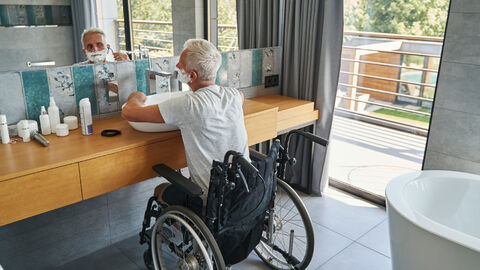
The obvious question is: What do I want my bathroom to look like today? We think there is another question worth asking: What will I need this bathroom to do in another 15 or 20 years? That doesn't mean designing a bathroom for an imagined future version of yourself. It means making smart decisions today that leave room for tomorrow. Maybe that means thinking strategically about the height and placement of fixtures. Choosing a shower configuration that's easier to enter. Adding blocking behind the walls so an assist bar can be installed later without opening everything back up. Selecting stylish flooring that is also textured and high-grip. Thinking about lighting differently.
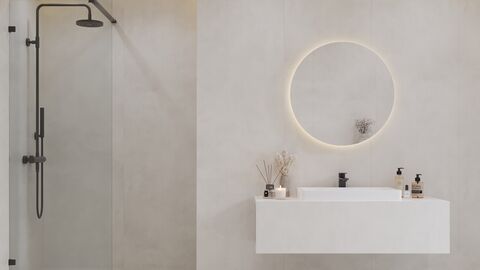
And increasingly, these aren't compromises. Features traditionally associated with safety and accessibility can be incorporated as sleek, stylish design elements. A well-placed rail doesn't have to look clinical. A lower-threshold shower doesn't have to announce why it is there.
The best future-ready design often just looks like good design. If we can make a thoughtful choice during a remodel today that helps prevent the homeowner from needing to tear it apart and start again 15 or 20 years from now, that's longevity too.
Longevity of “newness”
There's also a less tangible form of longevity.
Call it the feeling of newness. Think about something you've bought that you still appreciate years later. Maybe it's a great coat, a piece of furniture or a kitchen tool you researched obsessively before buying. At some point, it stopped being new. But it never stopped feeling like a good decision.
We want home improvements to work the same way. The goal isn't to somehow make a bathroom look untouched after a decade of real life. Homes are meant to be lived in. The goal is to make choices that are timeless. Materials that don't immediately look tired. Design that isn't dependent on a passing trend. Details that make everyday routines noticeably easier. Construction that doesn't leave you discovering shortcuts three years later.
Five years from now, we want you to walk into that room and still think: I'm glad we did this. That's a different standard than simply completing a project.
Longevity of the homeowner relationship
There's an odd convention in home improvement. Every time something needs to be done, homeowners are expected to start over. Find another contractor. Ask friends for recommendations. Read reviews. Make calls. Explain the house. Get estimates. Figure out who to trust. Then repeat the process for the next project.
We don't think homeownership should work that way. A home isn't a collection of unrelated projects. The bathroom affects how you live. The deck affects how you use the outdoors. Maintenance affects what needs to be replaced. The decisions you make now influence the decisions available to you 15 years later.
The more someone understands your home — and the people living in it — the better those decisions can become. Your home's context is preserved. That's why Havenside's goes beyond completing an individual project. We want to know the home. What has been changed. What hasn't. What's starting to age. What you're planning next. What isn't worth touching yet. Sometimes the most valuable advice a homeowner can receive is not “Here's what we can replace.” It's “You don't need to replace that yet.”
That is how a contractor relationship becomes a homeowner relationship.
Longevity of trust
Trust is easy to talk about when everything is new.
The harder test comes later. What happens when something needs an adjustment? When a product eventually requires repair? When you're considering the next project and aren't sure whether it's worth doing?
For us, longevity means remaining useful after the invoice is paid. That philosophy also influences the services we choose to provide. We don't believe every home need should require finding another specialist and beginning another relationship from scratch.
The longer we work with a homeowner, the more context we have. And context allows us to give better advice. Trust compounds. So should the value of the relationship.
Longevity of the home itself
Ultimately, all of these ideas point toward something bigger.
Most people don't experience their homes as investments, assets or collections of building systems every day.
They experience them as home. The place where mornings happen. Where people recover from bad days. Where kids grow. Where holidays repeat themselves until they become traditions.
A good home improvement shouldn't interrupt that relationship. It should help preserve it.
Sometimes that means repairing instead of replacing. Sometimes it means remodeling. Sometimes it means making a small change now that prevents a much bigger intervention later.
And sometimes it means recognizing that the people living inside a home have changed — and allowing the home to change gracefully with them.
Our measure of longevity
So when we talk about longevity at Havenside, we're talking about more than how long something lasts.
Longevity of the installed product. Longevity of the decisions behind it. Longevity of the relationship. Longevity of trust. Longevity of that feeling of newness.
And, ultimately:
Longevity of value delivered.
Because the best home improvement isn't the one you love on installation day.
It's the one you're still glad you chose years later.
Read more about our Services .
Ready to take the next step? Contact Us to get started with a home improvement project that is designed for your unique needs.